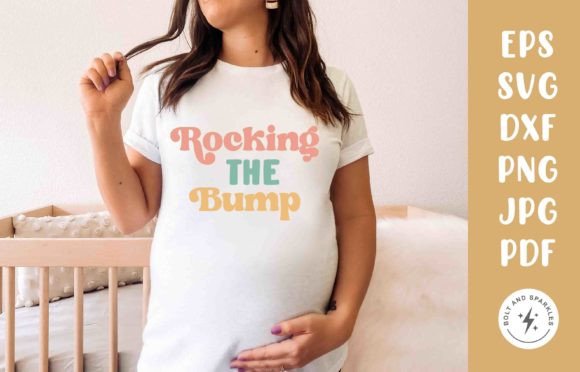
Rocking the Bump, SVG Graphics for Crafts
As someone who has spent years turning digital files into tangible products for my Etsy shop and local craft fairs, I know that not every graphic design asset is created equal. You can have a cute concept, but if the lines are messy or the file structure is a nightmare, your Cricut project will fail before it even starts. Recently, I pulled Rocking the Bump, SVG from the market to test its viability for my upcoming maternity-themed collection. I needed something that felt authentic, slightly retro, and versatile enough for both vinyl cutting and sublimation. Here is my honest review of how this PNG design and accompanying vector files performed in a real handmade business workflow.
First Impressions: Mood and Market Fit
The moment I opened the preview JPG, I knew this asset had potential. The style leans heavily into a playful, retro aesthetic that fits perfectly with the current trend of "funny pregnancy" announcements. It doesn’t feel overly delicate or traditional; instead, it has a bold, confident energy that appeals to modern expectant parents. For my small business branding, this meant I could position the product as trendy rather than just sentimental.
I immediately visualized this on matte black tumblers for a gender-neutral reveal or on soft heather grey tote bags for baby shower favors. The graphics suggest a customer base that values humor and personality over strict elegance. It feels premium yet approachable, which is exactly what sells well on creative marketplaces. If you are looking to add a touch of whimsy to your seasonal collections, this illustration stands out without being overwhelming.
File Integrity and Technical Workflow
What really sold me was the completeness of the design bundle. Most sellers know the pain of receiving an SVG that requires hours of cleanup in Illustrator or Silhouette Studio. This package included 1 EPS File, 1 SVG File, 1 DXF File, 1 PDF File, and high-resolution images. Having multiple formats is crucial for different types of production.
For my t-shirt design workflow, the SVG file was clean. The paths were closed, and there were no unnecessary anchor points cluttering the code. This saved me significant time during the weeding process on my cutter. When I tested the DXF file, it held up well for simpler laser engraving projects, such as wooden nursery signs. The inclusion of a 300 dpi High PNG design was also a smart move, allowing me to quickly mock up products in Photoshop without waiting for vector rendering.
However, always check the EPS file if you plan to do complex color separations. While the main shapes were solid, verifying the layer structure ensures you don’t accidentally cut through a detail you wanted to leave intact. In this case, the layers were logical, making it easy to isolate specific elements if I wanted to create a sticker design using only part of the composition.
Real-World Application: From Screen to Product
I put this graphic design asset to the test across several mediums to see where it truly shines. First, I attempted a vinyl cutting project for custom mugs. The contrast between the white vinyl and the dark mug surface highlighted the curves of the typography beautifully. It worked exceptionally well as a standalone statement piece. Because the lines are relatively thick, it avoids the common pitfall of tearing when weeding intricate details.
Next, I moved to sublimation design. Using the provided raster images, I printed onto polyester tote bags. The 300 dpi resolution was sufficient for large-format printing, though I noticed that extremely fine text might blur slightly if scaled down too much. For this reason, I recommend using the vector files whenever possible for sharp edges. The colors translated well, retaining that retro vibe that makes the design pop.
This asset also proved useful for printable design projects. I integrated the layout into a set of thank-you cards for my handmade packaging. The balance of negative space allowed me to add serif font and handwritten font styles around the central image without creating a crowded composition. It serves as a strong focal point that anchors the entire page, guiding the customer’s eye directly to the message.
Strategic Use Cases and Limitations
While this is a versatile clipart option, it is important to understand where it works best and where caution is needed. It excels in large cut files and decorative accents. Think oversized wall art prints, large tote bag designs, or prominent placement on party decorations like banners and gift tags. It is also ideal for personalized items where the graphic acts as the main character of the product.
Conversely, use care with very small cutting details. If you plan to make tiny planner stickers or miniature embellishments, the thin lines within the lettering might become difficult to weed accurately. Additionally, be mindful of low-contrast colors. On light-colored fabrics, ensure your vinyl or ink provides enough contrast so the design remains readable. Layered vinyl projects require careful planning; since this is primarily a single-color friendly design, attempting multi-layer registration might result in misalignment unless you simplify the layout.
Pro Tips for Handmade Sellers
To get the most out of this commercial design, I recommend testing the file thoroughly before selling finished products. Always place the design on real mockups to gauge scale. A design that looks balanced on screen might look top-heavy on a physical product. I found that resizing it for different products required slight adjustments to the surrounding text to maintain harmony.
When pairing fonts, experiment with display font styles to complement the retro feel of the Rocking the Bump, SVG. Sans serif fonts work well for a modern twist, while script fonts can soften the overall look for a more feminine appeal. Remember to confirm your commercial license before using these assets for customer orders or handmade business products. Understanding the terms allows you to price your items correctly and avoid legal issues.
Finally, consider how this fits into your broader strategy. Is it a standalone Etsy product? Or is it part of a larger seasonal craft bundle? By integrating this graphic design asset into a cohesive collection—perhaps paired with matching gift tags and social media templates—you increase the perceived value for your buyers. Whether you are preparing for a busy holiday season or expanding your print-on-demand offerings, having reliable design assets streamlines your creative process and helps you deliver quality products consistently.